Completion of the Multimodal Alerts Project
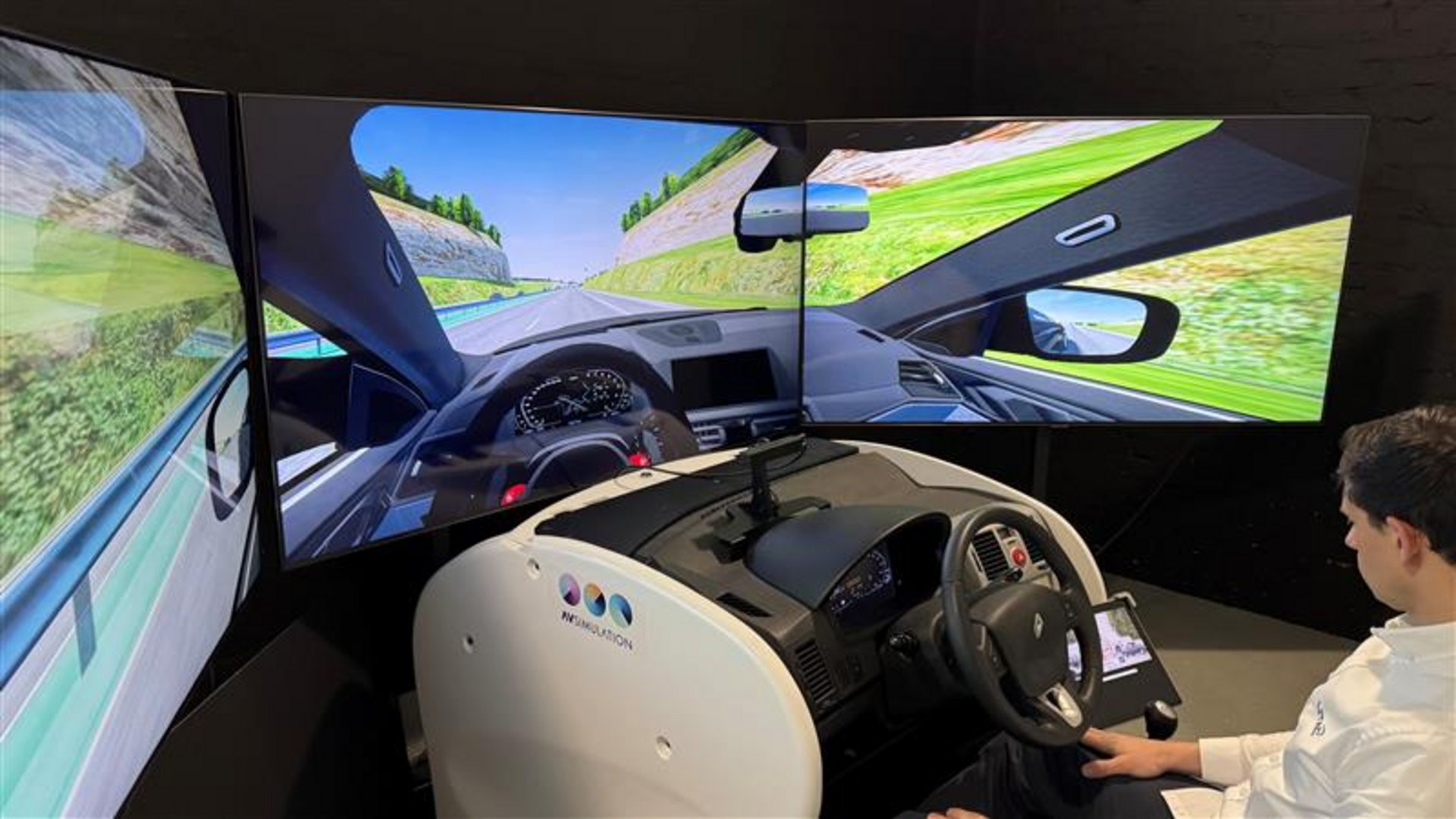
The multimodal alerts project, conducted jointly by the Acoustics, Statistics, and Human Factors teams, has now come to completion. This work is part of an effort to better understand how drivers perceive alerts depending on driving situations and their level of attention.
The main objective was to identify how to adapt alert modalities — visual, auditory, and haptic — according to whether the driving situation is stable or requires a rapid response, while also taking into account the driver’s level of attention, whether focused or distracted.
The multimodal alerts project, conducted jointly by the Acoustics, Statistics, and Human Factors teams, has now come to completion. This work is part of an effort to better understand how drivers perceive alerts depending on driving situations and their level of attention.
The main objective was to identify how to adapt alert modalities visual, auditory, and haptic according to whether the driving situation is stable or requires a rapid response, while also taking into account the driver’s level of attention, whether focused or distracted.
Key findings
The results show that an alert perceived as “adequate” neither insufficient nor excessive depends on the driving context and the level of urgency. The studies also highlight the impact of background noise, which increases with speed and directly affects both the perception of auditory alerts and driver vigilance.
They further demonstrate the importance of complementing visual messages with auditory and/or haptic alerts, as all three modalities can be effectively combined.
Differences in sensitivity were also observed between user profiles, particularly between men and women, emphasizing the value of a differentiated approach.
Two complementary studies were conducted. The first, under controlled straight-line conditions, analyzed the behavior of attentive drivers at speeds ranging from 50 to 130 km/h, revealing increased vigilance at higher speeds linked to the sound environment.
The second, carried out in driving simulation, explored more complex and urgent scenarios such as pedestrian crossings and evaluated multimodal alert systems beyond the visual channel alone.
Next Steps
This project represents an important first step and opens up new perspectives, particularly with the validation and extension of the developed model toward multi-frequency approaches, integrating a wider range of speeds and alert frequencies.
A new project, with a stronger focus on cognitive distraction, is planned for 2027 to further build on these results.
The final report has been submitted to the DSR and will be available soon. This project highlights the teams’ ability to collaborate effectively on innovation challenges related to road safety and human factors.
Many thanks to all contributors for their involvement, as well as to their managers for their support.